SecureBio Detection Updates, August 2026
Since our March update, we have expanded our biosurveillance network, substantially improved the sensitivity of our nasal swab monitoring program, and built new partnerships to accelerate public-health response. These advances bring us closer to a surveillance system that can detect unusual biological events early, characterize them quickly, and get actionable information to the people responsible for responding.
Wastewater Sequencing
We’ve continued to expand CASPER and are now up to 49 sites representing 24 cities. We are still adding sites: if you are interested in sharing samples, please reach out to casper-inquiries@securebio.org. With this expansion, the consortium has reached 2.9 trillion read pairs uploaded to the Sequence Read Archive (SRA), continuing to represent the majority of the metagenomic wastewater sequencing data on SRA.
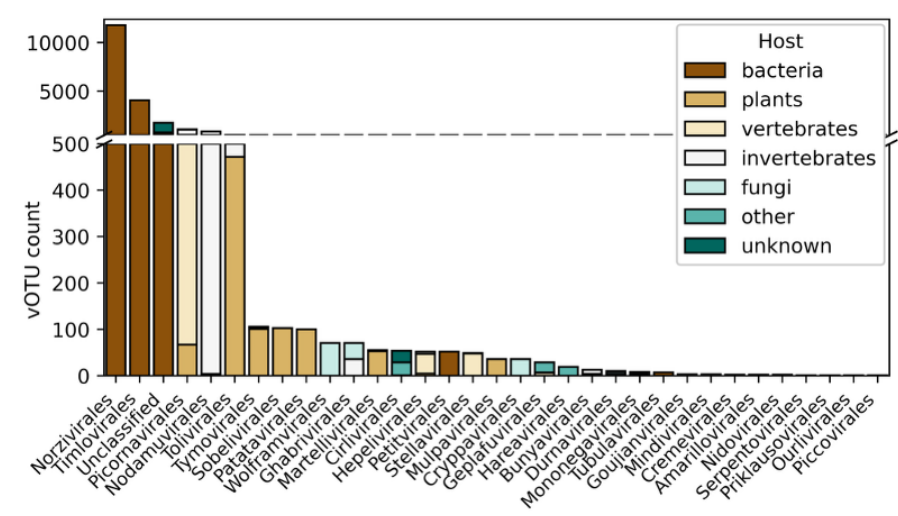
Rose Kantor (LLNL), Migun Shakya (LANL), and several other CASPER collaborators published a preprint presenting a wastewater RNA virome analysis. This work used data from CASPER’s ultra-deep untargeted sequencing of wastewater samples to assemble the RNA viruses typically present in wastewater. The resulting database contains 21,015 nearly complete viral genomes, of which more than 17,000 were novel. This database should increase the efficiency and accuracy of future human pathogen screening efforts by improving our understanding of the background metagenome.
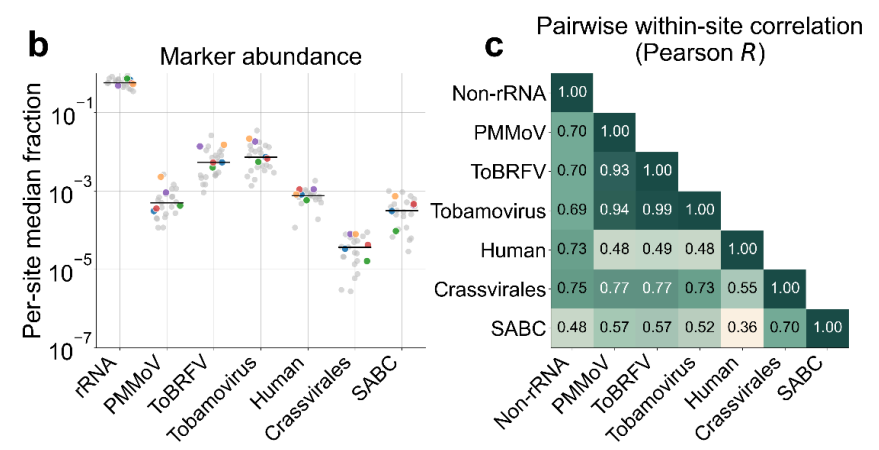
Lenni Justen (Sabeti lab) also published a preprint on the use of wastewater metagenomic sequencing (WW-MGS) for quantitative pathogen tracking. This work tested normalization to seven different types of marker sequences and found that normalization to tobamovirus markers gave the best performance, generally improving concordance with wastewater PCR results and clinical trends across sites. This approach can make WW-MGS an even more effective tool for monitoring trends in viral abundance and spread.
We recently published a blog post highlighting some of the most interesting detections to come out of CASPER, including vaccine candidates and other (harmless) remnants of biology lab research. CASPER data were also featured in the CDC’s July 16 MMWR update on the detection of measles cases via wastewater monitoring.
We also marked the first in-person gathering of the CASPER consortium, hosted at the Broad Institute in early June. Members presented their work in traditional presentations and lightning talks and enjoyed the opportunity to connect face-to-face.
Pooled Individual Sequencing (Zephyr)
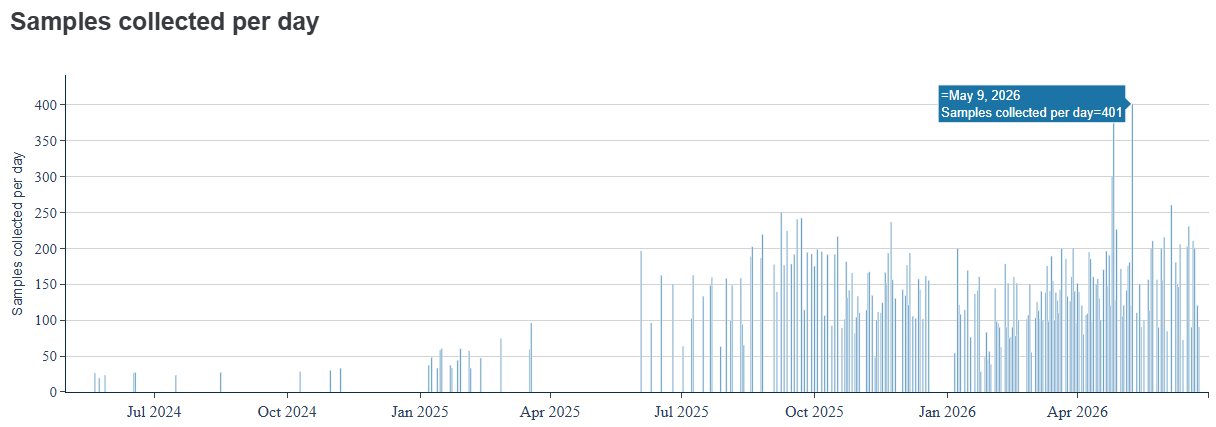
Zephyr, our nasal swab sampling program, has continued through the spring and summer, with approximately 30,000 samples collected since March. We also achieved a new single-day collection record of 401 swabs on May 9.
Some of the notable detections through Zephyr this spring included an unseasonal RSV outbreak in Boston, which physicians have also seen. We also detected Hepatitis C and D in some sample pools, and we recovered and subtyped a human parainfluenza genome. We’re continuing to present real-time data from this work on our Zephyr Dashboard.
This work has continued to attract the notice of local journalists, earning a feature in Cambridge Day (also published in the MIT Scope) titled “A Day in the Life of a Nasal Swab”.
We’ve also made several changes to Zephyr sample processing that significantly improved viral yields (details in the Laboratory Work section below), increasing the median viral reads by 540x and doubling the proportion of sample pools with complete genomes to 55%. This increased yield gives us an even better picture of the viruses circulating in the area and substantially enhances our ability to capture rare and low-abundance viruses, as might occur at the beginning of a novel pandemic. In particular, the improved ability to generate complete genomes of any potentially novel pathogens supports downstream work such as test design, determination of infectious pathways, and vaccine or antiviral development.
In an effort to make these data useful for researchers and public health professionals, we have now published all human-scrubbed reads generated by Zephyr up to June 24, 2026. This release represents 442 ONT sequencing pools, 25,790 unique nasal swabs, and 179 million ONT long reads from Boston, Cambridge, and Somerville (PRJNA1379685). We encourage researchers to use this data set, and to contact us with any questions.
Laboratory Work
Our move to our own lab space in Kendall Square was completed in May 2026. Expanding to 7,500 square feet and moving to within a pleasant five-minute walk of our main offices at 1 Broadway has already paid off for both growth and collaboration. The larger footprint gives us room to scale sample throughput, and the short walk between sites makes it far easier for lab and non-lab staff to coordinate in person. The additional square footage and infrastructure is also enabling us to bring on liquid handling and laboratory automation equipment that will let us process higher sample volumes with less manual effort and more consistent data quality. This positions the lab to keep pace with the expansion of our sampling programs and the throughput targets ahead.
In the new space, we’ve brought a new MiSeq i100 Plus sequencer online. This new version of the MiSeq gives us the flexibility to perform rapid R&D experiments with a sequencing output up to 100 million reads, enabling us to pilot and optimize methods before bringing them online for our production-level sequencing of ~1 billion reads per sample at Broad Clinical Labs. The MiSeq i100 features run times as fast as 4 hours, allowing us to iterate and improve faster. Additionally, we purchased an iconPCR machine, which allows us to prevent over-amplification and better balance our sequencing libraries.
As mentioned above, we made several changes to Zephyr sample processing that significantly improved viral yields:
- Mean viral reads increased by 17.6x (10,612 → 186,550)
- Median viral reads increased by 540x (53 → 28,594)
- Median viral read fraction increased by 430x (0.004% → 1.56%)
- Samples with complete genomes increased by 2x (27% of samples → 55% of samples)
The bulk of the improvement came from the addition of a “clean and concentrate” step using the Zymo RCC column.
We also made a switch to NEBNext reagents for our Illumina library prep, which has yielded both longer inserts and higher-quality reads.
Analysis of Sequencing Data
Our major recent themes have been increased support of the lab functions, increased automation, and unlocking productivity gains from frontier AI capabilities.
Our work to support lab operations included several major analyses with implications for the methods being applied in the lab. One of these has already led to a change in the library prep kit to NEBNext (see above). In addition, we cleared out our backlog of experimental analyses, which has meant that we can analyze incoming data much more rapidly. We have also completed several initiatives to provide increased support for day-to-day lab work.
In terms of pipeline improvements, we worked on automating Zephyr data processing, bringing this pipeline up to the same level of end-to-end automation as our existing wastewater pipelines. We have made major progress in automating chimera detection and also made some changes that allow us to better observe the progress of data through our automated pipelines. We also recently deployed Nucleaze (a fast k-mer screening tool developed by Jack Douglass with mentorship by Evan Fields) in production for the first time, using it to filter putative viral reads in mgs-workflow. We are now collecting quantitative data to evaluate the full impact of these recent improvements.
We’ve also been exploring the outputs of different sequencing platforms to reduce costs and time per read. Our recent trials of Ultima sequencing yielded mixed results that we’re continuing to analyze, and we’re planning to continue assessing alternatives to Illumina.
We worked heavily on incorporating frontier AI into our workflows to boost productivity. One notable improvement was configuring standardized sandbox instances for AI coding, which has allowed us to safely run AI agents with minimal permissions restrictions. We also updated our code review policy to enable single-human review in cases where AI capabilities are strong and risks are low. Finally, we’ve been testing a number of new AI tools and workflows, including Claude Managed Agents, Claude Tag, GPT Rosalind, and cross-agent code review; as a result, we now use cross-agent review (Claude Code x Codex) routinely and have used Claude Tag and Claude Managed Agents frequently to generate and review pull requests.
We also published a blog post on a question that we get asked a lot: “Would this have flagged COVID?” We are fairly confident that both of our main algorithms (Clades of Concern and Chimera Detection) would have flagged COVID, although Chimera Detection would have needed 100x more sequencing reads to pick up on the differences between SARS-CoV-2 and its circulating relatives.
Organizational Updates
SecureBio has been well represented at conferences over the past several months. Jeff Kaufman (Director of Detection) discussed the evolving threat landscape, and how metagenomic sequencing can help, as a panelist at Imperial College London’s Biosecurity at the Frontier conference. Kelly Chafin (Head of Response & Federal Strategy) spoke at the Johns Hopkins Center for Health Security genomic surveillance workshop. Research scientist Alessandro Zulli presented work at the Annual Conference of the Council of State and Territorial Epidemiologists (CSTE), the National Association of County and City Health Officials (NACCHO360), the Stanford Existential Risks Initiative (SERI) symposium and the Yale Existential Risk Initiative. SecureBio also had a presence at the American Society for Microbiology’s ASM Microbe meeting, attended by James Kremer (Head of Lab Science) and Freddy Lee (Sr. Metagenomics Scientist and Molecular Lead).
Partnerships and Programs
We are currently in the process of expanding the Zephyr program to 4 sampling locations in Miami, in collaboration with University of Miami’s Dr. Helena Solo-Gabriele and Dr. Mario Stevenson at the Center for AIDS Research (CFAR) and University of Miami Miller School of Medicine. Much of the initial planning for the expansion is complete, and we expect to begin collecting and analyzing samples in August. We are particularly excited about the opportunities that this collaboration will bring for better understanding respiratory pathogen circulation in a climate very distinct from Boston’s and with different patterns of global travel.
We’ve also entered into a Cooperative Research and Development Agreement (CRADA) with the US Air Force Research Laboratory’s 711th Human Performance Wing to enable data sharing and data analytics for environmental surveillance.
We’re wrapping up a 10-week pilot project to assess transmission dynamics associated with mass gatherings such as concerts, sporting events, and conventions. This project is led by Harvard T. Chan School of Public Health Professor Hannah Healy, with collaboration from the Boston Public Health Commission and SecureBio.
It’s not enough to detect a novel pathogen: once you’ve learned about a threat you need to be able to quickly scale monitoring to understand where to focus response resources. As we discussed in a recent blog post, this makes relatively inexpensive and highly scalable wastewater PCR an excellent complement to pathogen-agnostic metagenomic sequencing. We are launching a project in collaboration with the Boehm lab at Stanford University to cut the time from identifying a new pathogen to having a validated PCR wastewater assay from weeks down to 72 hours.
We’ve also been selected as one of four inaugural partners in the OpenAI Rosalind Biodefense initiative. We are testing GPT-Rosalind across our lab and computational work, and it often saves us significant time. One place where it’s been especially helpful in our initial work is as a research assistant.
Escalation and Response
We are continuing to refine our processes and methods for escalating hits on our biosurveillance system, coined SecureBio Alerts. Since our March updates post, we have generated seven Alerts: cases where we detected something potentially concerning that merited escalation beyond our internal team and our academic partners. We cover several of these in a recent blog post. These cases have demonstrated not only our ability to sensitively identify and assess biological events but also our ability to directly communicate with and notify appropriate entities for response actions.
During the FIFA World Cup, Georgetown University’s Health Security Operations Center (HSOC) joined the CASPER network for biosurveillance. This provided an additional avenue for rapid, direct information and data sharing for any detections of concern with over 1,200 state and local health officials during this critical event.
Team
Since our last update in March, we’ve hired several people across the computational and laboratory groups:
- Freddy Lee, Senior Metagenomics Scientist. Freddy joins us from Seres Therapeutics, where he led the development of innovative molecular methods to facilitate drug discovery and evaluation of live biotherapeutics products designed to treat human gut diseases. Freddy is an expert in NGS-based method development, specializing in building high-throughput automated pipelines focused on high-quality data generation. Freddy earned his PhD from Indiana University, under the mentorship of Dr. Irene Newton, where he was awarded a NSF-GRFP fellowship for characterizing the composition and metabolic function of the European honey bee gut microbiome. Freddy completed his postdoctoral training under the co-mentorship of Dr. Levin, where he pioneered flatworms as a model organism for studying the microbe-host dynamics that influence regenerative biology. In his spare time, Freddy enjoys competing in recreational team sports.
- Derek Rothenheber, Metagenomic Scientist. Derek joins SecureBio from BostonGene, where he was a Scientist validating WGS methylation sequencing assays for clinical and R&D applications. Previously, at Flagship Labs 70 and Indigo Agriculture, he developed methods for viral discovery and specialized workflows to enrich endophytic microbes for shotgun metagenomics. Derek earned his MS from the University of New Hampshire, where his research focused on using microbial source tracking to fingerprint watersheds and identify fecal pollution sources affecting coastal water quality. In his free time, Derek is an avid Fantasy/Sci-Fi reader and enjoys exploring the outdoors, especially with his 2-year-old son.
- Megan Hockman, Research Scientist. Megan joins us following a PhD studying virus reassortment at Emory University under Dr. Anice Lowen and several years of postdoctoral work in bioinformatics in the laboratories of Dr. David Gresham (NYU) and Dr. Elodie Ghedin (NIH/NIAID). She also worked briefly in the NIAID Office of Communications and Government Relations, LACMB. Megan will be using her expertise in virology and bioinformatics to assist the science team in data analysis. Outside of work, she runs trail ultramarathons, writes short stories, and knits.
- Tanya Gonzalez, Research Associate. Tanya joins the lab after approximately six months on the Zephyr project as a Field Sampler. She graduated from Northeastern University in December 2025 with Bachelor’s degrees in Psychology and Spanish. During her time at Northeastern, she conducted research in both the LED Lab, where she studied emotion regulation through eye-tracking and electrode-based measures, and the APPEAR Lab, where she assisted with data collection examining emerging adults with Autism and the impact of social media on body dysmorphia symptoms. Outside of work, Tanya is a national-level powerlifter.
- Robert Gambee, Software Engineer. Robert joins from FutureSearch, where he worked as a Research Engineer building the world’s leading AI forecaster. Before that, he was a Systems Integration Engineer at Formlabs, where he helped design and build several best-selling professional 3D printers. Robert also contributes to MIT FutureTech’s AI Risk Initiative, which aims to inform governments, industry and the general public about the risks from AI and how to address them. He is a multidisciplinary engineer who graduated from Harvey Mudd College. In his spare time, Robert enjoys hiking and falling down Wikipedia rabbit holes.
- Russell Rollins, Senior Cloud Infrastructure Engineer. Russell joins SecureBio from Salesforce, where he was tech lead on Terraformer, the internal Terraform platform that Pardot’s operations team uses to manage its clusters and fleet. Previously, he worked at HashiCorp on the Terraform Cloud platform team, where he designed gVisor-based sandboxing so untrusted customer infrastructure-as-code could execute safely in Nomad. Outside of work Russell enjoys college football (go Jackets!), hanging out with his cat Ink and dog Kafka, reading, and studying Chinese language and history (中文还在学,请多多 指教!).
- Jacqueline Chretien, Communications Program Manager. Jackie is joining SecureBio after over a decade as a scientific editor and team manager at Research Square/AJE, where she helped thousands of researchers shape and publish their work. She also spent three terms as a State Representative in New Hampshire and was named to the House Special Committee on COVID Response Efficacy. Jackie earned her PhD in molecular and cell biology from UC Berkeley, where she studied meiotic chromosome behavior in planarians in the Dernburg lab and wrote extensively for the Berkeley Science Review. Outside of work, she is an avid Red Sox fan and enjoys swimming and skiing with her family.
We continue to look for new people to join our team:
- Associate Scientist
- IT Manager
- Logistics Manager
- LIMS Platform lead
- Project Manager
- Public Health Response Manager
- Research Associate I
Please also keep an eye on our Careers page for new openings across the organization.